Last updated: October 23, 2026
Best home gym flooring, short answer: The best home gym flooring is 3/4-inch rubber stall mats over concrete, in a garage or a basement, because they protect the slab from dropped barbells and are usually the cheapest rubber per square foot when bought in store (about $60 to $90 per 4 × 6 mat). Under a bench, a rack or a machine, 3/8-inch rubber tiles or rolls are enough; for floor work only, EVA foam tiles.
3/4-inch rubber stall mats: barbell-proof, 24 sq ft per mat, picked up in store, no glue needed.
Can’t haul 100 lb mats? IncStores 4 × 6 Premium Mat, shipped. Spare bedroom with dumbbells only? ProsourceFit thick foam tiles.
Prices below are US in-store and Amazon prices; thicknesses are the sellers’ listed figures. Which flooring you need depends on whether a loaded barbell will ever touch the floor; the sections below sort that out, then rank six mats.
Our 3 quick picks
Compared and ranked from published specs and current listings. Prices change, so Amazon shows today’s price.
Black Friday home gym deals: see our tracker
Top pick
Tractor Supply Rubber Stall Mat, 4 × 6 ft × 3/4 in
Our pick for barbell gyms: 3/4 in vulcanized rubber, 24 sq ft per mat, about 100 lb, sold in store at Tractor Supply (no Amazon listing).
| Product | Price range | Best for | Key spec | |
|---|---|---|---|---|
| Tractor Supply Rubber Stall Mat | About $60 to $90 per 4 × 6 mat | Barbells, racks, platforms | Vulcanized rubber, 3/4 in, 24 sq ft, about 100 lb | Sold direct (see below) |
| IncStores 4 × 6 Premium Mat | $130 to $200 | The stall mat, delivered | Vulcanized rubber sheet, 24 sq ft | Check price at Amazon |
| Rubber-Cal Shark Tooth II | $55 to $100 | Under one rack or machine | SBR rubber mat, 1/2 in, 12 sq ft (3 × 4) | Check price at Amazon |
| IncStores 8 mm interlocking tiles | Check current price | Dumbbells, benches, clean look | Rubber tiles, 8 mm, 36 sq ft per 6 × 6 set, made in USA | Check price at Amazon |
| ProsourceFit Extra Thick puzzle mat | About $50 | Floor work, light dumbbells | EVA foam, 3/4 in, 24 sq ft with borders | Check price at Amazon |
| BalanceFrom puzzle mat | Check current price | Budget floor work | EVA foam, 3/4 in, 24 sq ft | Check price at Amazon |
Who it’s for (updated October 23, 2026)
- Barbells, racks and platforms: 3/4 in rubber stall mats
- Benches, dumbbells and a clean look: 8 mm interlocking rubber tiles
- Under one rack or machine: Rubber-Cal Shark Tooth II
- Floor work and light dumbbells: 3/4 in EVA foam tiles
Quick answers
What is the best gym flooring over concrete?
3/4-inch rubber stall mats laid straight on the slab; their weight holds them in place. For a cleaner look, 8 mm interlocking rubber tiles work under racks, benches and dumbbells.
Rubber flooring rolls vs interlocking tiles vs stall mats: which is best?
Stall mats are the cheapest and thickest rubber; interlocking tiles look cleaner and are easier to carry; rolls cover big areas with fewer seams but usually need tape at the seams. Foam is for floor work only, never under a barbell.
Are stall mats good for a home gym?
Yes. They are recycled vulcanized rubber, the same material as commercial gym rolls. Expect a strong rubber smell for two to four weeks; airing them outside and washing with dish soap shortens it.
How thick should home gym flooring be?
3/4 inch rubber if a loaded barbell will touch the floor, about 3/8 inch rubber for machines and dumbbells, and 1/2 to 3/4 inch foam for floor work only.
If you lift in a garage or basement, buy 3/4-inch rubber stall mats. The 4 by 6 foot mat from Tractor Supply is the one most home gyms are built on: 100 percent recycled vulcanized rubber, about 100 lb each, and usually the cheapest cost per square foot you will find. If you cannot haul 100 lb mats, the IncStores 4 by 6 Premium Mat is the same idea shipped to your door. For a spare bedroom with dumbbells and a bench, the ProsourceFit 3/4-inch puzzle mat is the foam tile to buy.
We compared and ranked these six floors on thickness, material, coverage, price per square foot and what owners report after a year of dropped weights. This is the floor under everything else in our home gym under $1,000 build, and it is the one purchase you only want to make once.
Our pick
Tractor Supply Rubber Stall Mat, 4 × 6 ft × 3/4 in
100% recycled vulcanized rubber · 24 sq ft per mat · about 100 lb · dual-surface (textured top, grooved bottom) · item 2219003 · sold in store
The standard garage gym floor for a reason: nothing at this price is as thick, as dense or as hard to damage. Two mats cover a rack footprint; six cover a 12 by 12 room. The catch is the weight and the smell for the first weeks, and you pick them up at the store rather than having them shipped.
At Tractor Supply. Price varies by store; check your local listing.
On this page
- Stall mats vs rubber tiles vs foam: which type you need
- Thickness: 3/4 inch for barbells, 3/8 inch for machines, foam for the rest
- How much to buy and what it costs per square foot
- Our picks, compared
- Tractor Supply stall mat
- IncStores 4 × 6 Premium Mat
- Rubber-Cal Shark Tooth II
- IncStores 8 mm interlocking tiles
- ProsourceFit 3/4-inch puzzle mat
- BalanceFrom 3/4-inch puzzle mat
- Who should skip these, and alternatives
- Frequently asked questions
- Sources
Stall mats vs rubber tiles vs foam: which type you need
| Type | Typical thickness | Cost per sq ft | Best for | Skip it for |
|---|---|---|---|---|
| Rubber stall mats | 3/4 in | Usually the cheapest rubber when bought in store | Barbells, deadlifts, racks, treadmills, garage floors | Anyone who can’t haul a 100 lb mat (buy them shipped instead) |
| Interlocking rubber tiles | 8 mm to 3/8 in | Mid to high, more than stall mats once delivered | Dumbbells, benches, machines, a clean finished look | Dropped barbells and heavy deadlifts on bare concrete |
| EVA foam puzzle tiles | About 3/4 in, soft | Low | Floor work, stretching, light dumbbells, bikes and rowers | Racks, loaded benches and any barbell work |
The table is the short version; the three paragraphs below explain why each type lands where it does.
Stall mats are sold for horse barns and adopted by lifters because a 3/4-inch slab of vulcanized rubber shrugs off a dropped barbell, a 400 lb rack and a treadmill. They come as 4 by 6 foot sheets that you butt together; they are heavy, they smell of rubber for a few weeks, and the edges can lift slightly on an uneven floor until they settle. Gray Matter Lifting calls them the best home gym flooring “without a doubt”, and BarBend’s roundup names Tractor Supply’s as the best stall mats.
Rubber tiles and rolls are the gym-store version: thinner (8 mm to 3/8 inch is common), cleaner edges, lower odor, and a wider choice of colors. Interlocking tiles install in minutes and come back up if you move; rolls give a seamless floor but have to be cut and usually taped down. BarBend’s overall pick is Living.Fit’s interlocking panels, and its pick for concrete is Rubber Flooring Inc’s 8 mm rolls.
EVA foam puzzle tiles are light, cheap and comfortable for floor work, and they are the wrong floor for a barbell. Foam dents under a loaded rack, tears under a bench leg and shifts under a heavy deadlift. They are right for a dumbbell corner, a bike or rower, stretching and anything with kids around. Our cardio machine guide covers the machines that live happily on foam.
Thickness: 3/4 inch for barbells, 3/8 inch for machines, foam for the rest
The rule we used to rank: if a loaded bar will ever touch the floor, buy 3/4 inch rubber. If you drop bumper plates from overhead, 3/4 inch is the minimum and a second layer under the platform is not overkill. Iron plates on a 3/4-inch mat will mark the mat, not the concrete under it.
Putting a Smith machine on mats? Our home Smith machine guide lists each frame’s footprint, so you can count how many 4 by 6 ft mats you need.
Training through winter? Mats keep your feet off a cold slab but do not warm the air; our best garage gym heaters guide sizes a heater for a 1- or 2-car garage.
For racks, benches and dumbbells up to about 75 lb, 3/8 inch (roughly 8 to 10 mm) rubber is enough and easier to handle. BarBend notes that the Living.Fit tiles at 2/5 inch survived a 300 lb drop from six feet without coming unhooked. Below 1/4 inch you are buying a floor protector for a stationary bike, not a lifting surface.
Foam thickness works the other way: thicker foam is softer, which is what you want under your knees and the opposite of what you want under a bench. 3/4-inch EVA is the sweet spot for floor work; 1/2 inch is fine for a yoga corner.
How much to buy and what it costs per square foot
Measure the space you will actually train in, not the room. A rack and bench footprint is about 8 by 8 feet, which is three 4 by 6 stall mats with a few inches to trim, or two 6 by 6 tile sets. A one-car garage bay is roughly 10 by 20 feet, or eight to nine stall mats.
Per square foot, a Tractor Supply stall mat is the cheapest rubber here; the IncStores 4 by 6 shipped to your door costs about twice as much; the IncStores 8 mm tile set sits between them; Rubber-Cal’s 1/2-inch 3 by 4 mat is the priciest; and the foam puzzle mats are cheap but are foam. Shipping is why stall mats win: a hundred pounds of rubber is expensive to mail, and Tractor Supply has already paid to get it to a store near you.
Our picks, compared
| Product | Type | Thickness | Coverage | Weight | Best for |
|---|---|---|---|---|---|
| Tractor Supply Rubber Stall Mat | Vulcanized rubber sheet | 3/4 in | 24 sq ft | about 100 lb | Barbells, racks, platforms |
| IncStores 4 × 6 Premium Mat Check price | Vulcanized rubber sheet | Heavy-duty (see listing) | 24 sq ft | Heavy | Same job, delivered |
| Rubber-Cal Shark Tooth II | SBR / reclaimed rubber mat | 1/2 in | 12 sq ft (3 × 4) | Moderate | Under a rack or machine |
| IncStores 8 mm interlocking tiles Check price | Rubber tiles, made in USA | 8 mm (about 5/16 in) | 36 sq ft per 6 × 6 set | Light per tile | Dumbbells, benches, clean look |
| ProsourceFit Extra Thick puzzle mat Check price | EVA foam tiles | 3/4 in | 24 sq ft (6 tiles + borders) | Very light | Floor work, light dumbbells |
| BalanceFrom puzzle mat Check price | EVA foam tiles | 3/4 in | 24 sq ft | Very light | Budget floor work |
Tractor Supply Rubber Stall Mat: our pick for barbell gyms
The pick box has the numbers. What they do not show: these mats are the floor in most of the garage gyms you see online because they take a dropped bar for a decade and cost less per square foot than anything shipped. Owners on r/tractorsupply note the mats changed in 2024, with each still about 100 lb and the smooth-top version costing more than the standard one, so look at what your store has in stock before you load the truck.
What we like: 3/4 inch of dense vulcanized rubber, 24 sq ft per mat, the lowest cost per foot here, and a 4.6-star average across more than 5,000 store reviews. What we don’t: 100 lb per mat, a rubber smell for the first few weeks (air them outside), store pickup only, and edges that need a straight utility-knife cut to fit a room.
Who it is for: anyone with a rack, a barbell and a vehicle that can carry rubber. If that is you, stop reading and go to the store.
IncStores 4 × 6 Premium Mat: the stall mat, delivered
Best delivered
IncStores 4’×6′ Premium Vulcanized Rubber Mat
Premium and recycled tire rubber · 4 × 6 ft (24 sq ft) · slip-resistant top · sold in several sizes
The same slab-of-rubber approach as a stall mat without a trip to the farm store. You pay roughly double for the delivery, which is worth it for an apartment lifter or anyone without a truck. Reviewers use it under racks, treadmills and deadlift stations.
On Amazon. We may earn a commission; you pay the same.
What we like: delivered to the door, vulcanized rubber rather than bonded crumb, several sizes in the same listing, and a low odor compared with barn-grade mats. What we don’t: the price per square foot is more than twice a store stall mat, and Amazon’s listing moves between sizes, so check that the 4 by 6 is the one in your cart.
Rubber-Cal Shark Tooth II: a half-inch mat for one machine or one rack
Best single mat
Rubber-Cal Shark Tooth II Heavy Duty Mat, 1/2 in × 3 × 4 ft
SBR and reclaimed rubber · 1/2 in thick · 3 × 4 ft (12 sq ft) · non-slip texture · indoor or outdoor
A half-inch commercial mat sized for a single station: under a rower, a bike, a plate tree or one side of a rack. Rubber-Cal is a flooring company first, and the Shark Tooth line is also sold through Home Depot in 4 by 6 and 3/4-inch versions if you want a bigger piece.
On Amazon. We may earn a commission; you pay the same.
What we like: a real rubber mat at half the weight of a stall mat, a textured top that does not get slick with sweat, and no interlocking edges to trip on. What we don’t: 12 sq ft is small, and per square foot it is the most expensive rubber here, so it is a spot solution rather than a whole-room floor.
IncStores 8 mm interlocking rubber tiles: the clean-looking rubber floor
Best rubber tiles
IncStores Heavy Duty Rubber Interlocking Tiles, 8 mm, 6 × 6 ft set (9 tiles)
Die-cut in the USA · 24 × 24 in tiles · 8 mm thick · removable straight edges included · 5-year warranty
Rubber that installs like a puzzle mat. IncStores sells 1/4 inch for residential and 8 mm for commercial use; the 8 mm set is what we would put under a bench, a dumbbell rack or a functional trainer in a room where stall mats would look out of place.
On Amazon. We may earn a commission; you pay the same.
What we like: made in the USA with a five-year warranty, edges that finish flush, and tiles that come up again when you move. What we don’t: 8 mm is thin for a barbell you drop, and a 10 by 20 garage costs nearly twice as much in tiles as in stall mats.
ProsourceFit Extra Thick puzzle mat: the foam to buy
Best foam
ProsourceFit Weaved Pattern Extra Thick Exercise Puzzle Mat, 3/4 in
High-density EVA foam · six 24 × 24 in tiles plus 12 end borders · 24 sq ft · 3/4 in · water-resistant, non-skid
The best-finished foam tile we compared: a weaved top that hides scuffs, border pieces for straight edges and denser foam than the bargain sets. Right for a dumbbell corner, a bike, stretching and a kids’ play area that doubles as a gym.
On Amazon. We may earn a commission; you pay the same.
What we like: dense foam that does not compress as badly as cheaper EVA, a textured top, borders in the box and a four-pack covers most spare-bedroom gyms. What we don’t: it is still foam, so a bench leg or a 50 lb dumbbell corner will leave a dent, and it is not a barbell floor.
BalanceFrom puzzle mat: the budget foam
Budget pick
BalanceFrom Puzzle Exercise Mat, 3/4 in, 24 sq ft
High-density EVA foam · 3/4 in · 24 sq ft per pack · non-slip pattern · wipes clean
The best-selling foam tile on Amazon for a reason: the lowest price per square foot in this guide, delivered. Buy it for floor work, a treadmill corner or a first apartment gym, and move it to the kids’ room when you upgrade to rubber.
On Amazon. We may earn a commission; you pay the same.
What we like: the lowest cost per foot here, light enough to mail in one box, easy to cut. What we don’t: no border pieces in most packs, softer than the ProsourceFit under a loaded bench, and like all EVA it is not a rack or barbell floor.
Exercise flooring for home gym by station: what goes under a rack, a bench, a treadmill and a mat
Most home gyms are not one floor but three or four zones, and the ranking above sorts into them. This is the same thickness rule as above, applied station by station.
- Barbell platform, deadlifts, cleans, bumper plate drops: 3/4-inch rubber stall mats (Tractor Supply in store, IncStores 4 by 6 shipped). Two 4 by 6 mats side by side cover a lifting platform; three cover a rack and bench footprint.
- Power rack or squat rack, no bar drops: 3/4-inch stall mats are still the safe choice because the rack feet and the plates sit on them, but 3/8-inch (8 to 10 mm) rubber tiles such as the IncStores interlocking set will carry a rack that is never used for drops. Low ceiling? Our compact garage gym squat rack guide covers rack height before you add mat thickness.
- Adjustable bench and dumbbells up to about 75 lb: 3/8-inch rubber (Rubber-Cal Shark Tooth II for one station, IncStores tiles for a room). Firm rubber keeps a bench from rocking; thick foam does the opposite.
- Treadmill, walking pad, rower or bike: 1/4 to 3/8-inch rubber under the footprint protects the floor and cuts vibration noise. See our best cardio machines for a home gym ranking for each machine’s footprint.
- Stretching, core, kettlebell flows and bodyweight work: 1/2 to 3/4-inch EVA foam puzzle tiles (ProsourceFit, BalanceFrom). Keep kettlebells on the rubber zone; a dropped bell dents foam.
If the budget covers only one zone, floor the barbell or rack area first with rubber and leave foam for later; it is the cheapest part to add.
Who should skip these, and alternatives
If you have a finished basement with a drop ceiling and neighbors below: noise is your problem, not durability. BarBend’s soundproofing pick is the SecondSkin Stomp Mat, a dense isolation mat used under laundromat machines; put stall mats on top of it under the platform.
If you want a seamless floor in a dedicated room: rolled rubber beats tiles and sheets on looks. Rubber Flooring Inc’s 8 mm rolls come with a 5-year warranty on home colors, per BarBend’s review, and IncStores sells an 8 mm roll on Amazon. Expect to cut and tape it yourself or hire it out.
If you build a deadlift platform: the classic recipe is two sheets of plywood with a stall mat on each side; our compact squat rack guide covers the footprint you will need to leave for it.
Budgeting the whole room? Our home gym budget calculator shows where flooring fits in the buy order for your budget.
Related comparison: Choosing the cardio machine that goes on the mat? Read Rowing machine vs treadmill: which is better at home?
Planning the whole room? Try the free Home Gym Builder: answer three questions and get a ranked shopping list.
Frequently asked questions
What type of flooring is best for a home gym?
Rubber: 3/4-inch stall mats for barbells and racks, and 8 mm or 3/8-inch rubber tiles or rolls for benches, dumbbells and machines. Foam is fine only for floor work and light weights.
What is the best permanent flooring for a home gym?
Glued or tightly fitted 3/4-inch rubber stall mats or interlocking rubber tiles over concrete. Rubber holds up to dropped weights for years; foam dents under racks and machines.
How much does home gym flooring cost?
In store, a 4 × 6 ft, 3/4-inch stall mat is usually about $60 to $90, the cheapest rubber per square foot. Delivered stall mats run about $130 to $200 each, and a 24 sq ft pack of EVA foam tiles is about $50.
Are horse stall mats safe to use indoors?
Yes. They are recycled vulcanized rubber, the same material as commercial gym rolls. The rubber smell is strong for the first two to four weeks; airing the mats outside in the sun for a few days and washing them with dish soap shortens it. Keep the room ventilated during that period.
How thick should home gym flooring be?
3/4 inch rubber if a loaded barbell will ever touch the floor, 3/8 inch (about 8 to 10 mm) rubber for racks, benches, dumbbells and machines, and 1/2 to 3/4 inch EVA foam for floor work only. Foam of any thickness is not a barbell floor.
Can I put a squat rack on foam puzzle mats?
You can, but the feet will dent the foam and the rack can rock on the compressed spots. Put a rubber mat or a plywood pad under the rack feet, or use rubber tiles under the rack and foam elsewhere.
Do I need to glue rubber flooring down?
Not stall mats or tiles; their weight and the interlocks hold them. Rolled rubber usually needs double-sided carpet tape at the seams, and a thin roll on a slick concrete floor may need it along every edge.
What is the cheapest way to floor a garage gym?
Tractor Supply 3/4-inch stall mats, 24 sq ft each, picked up in store. A 10 by 20 foot bay is eight to nine mats, and nothing shipped to your door comes close per square foot.
What is the best flooring for a garage gym?
3/4-inch rubber stall mats laid straight on the concrete. They take dropped barbells, a loaded rack and a parked car, are the cheapest rubber per square foot when bought in store, and need no glue. Choose 8 mm interlocking rubber tiles if you want a cleaner look and only lift dumbbells and machines, and keep EVA foam for a stretching corner.
Is there a garage gym floor that can be parked on?
Yes: 3/4-inch stall mats are made for horse trailers and barns and are routinely driven on; a car tire spreads its load over a wider patch than a loaded barbell plate does. Avoid foam, which crushes under a tire, and expect interlocking tiles to work apart under turning wheels unless they are taped at the edges. Wipe up oil drips, which soften rubber over time.
What are the best floor mats for a home gym?
In the order we rank them: Tractor Supply 3/4-inch stall mats for barbell gyms, IncStores 4 × 6 Premium Mat if you need stall mats shipped, Rubber-Cal Shark Tooth II for a single machine or rack, IncStores 8 mm interlocking tiles for a clean full-room rubber floor, ProsourceFit Extra Thick puzzle mat for floor work, and the BalanceFrom puzzle mat as the budget foam.
Rubber rolls vs tiles vs stall mats: which costs least per square foot?
Stall mats are usually the cheapest rubber per square foot when bought in store. 8 mm rubber rolls add shipping and tape to their per-foot price, and interlocking rubber tiles typically cost more per square foot delivered. Foam puzzle tiles are cheap per square foot but are not a barbell floor.
Is foam or rubber better for a home gym floor?
Rubber for anything with weight on it: racks, benches, barbells, dumbbells and cardio machines. Foam only for floor work such as stretching, core and yoga. Foam compresses under a loaded bench and tears under rack feet, while rubber stays firm and takes drops. Most home gyms end up with both: a rubber lifting zone and a small foam corner.
Can you put home gym flooring over carpet?
Foam tiles and dumbbell work, yes. For a rack or a barbell, carpet is a problem: the pad compresses, the mats shift and the rack can rock. The usual fix is a sheet of 3/4-inch plywood on the carpet with stall mats on top, or moving the lifting station to a concrete floor. Rubber mats also trap moisture against carpet, so lift them now and then to let the carpet dry.
Will rubber mats rust or cause moisture problems in an unheated garage?
Rubber itself does not rust, so stall mats and rubber tiles are a good fit for a cold garage. The thing to watch is condensation: a cold slab can sweat, and water trapped under a mat stays damp longer. Let a new or freshly cleaned slab dry fully before laying mats, lift a corner now and then to check, and run a dehumidifier if the garage stays damp. Rust risk is on the steel, not the floor: keep plates, bars and dumbbells on a rack or on the rubber rather than bare concrete, and wipe sweat off the bar after training.
How thick should home gym flooring be for deadlifts?
3/4-inch rubber is the minimum we rank for deadlifts, which is why stall mats are our pick for barbell gyms. Iron plates set down on a 3/4-inch mat mark the mat, not the concrete under it. If you drop bumper plates from the top of a lift, add a second layer under the plates or build a simple platform. Foam puzzle tiles and thin 8 mm tiles are not a deadlift floor.
Sources
- Tractor Supply: Rubber Stall Mat, 4 × 6 ft × 3/4 in (item 2219003)
- BarBend: Best Home Gym Flooring Options (2026)
- Gray Matter Lifting: The Best Home Gym Flooring
- r/tractorsupply: 4×6 horse stall mats changed
- Home Depot: Rubber-Cal Shark Tooth 3/4 in × 4 ft × 6 ft mat
- ProsourceFit: Exercise Puzzle Mat 3/4 in
- Amazon listings for the IncStores, Rubber-Cal, ProsourceFit and BalanceFrom products, read Oct 13, 2026
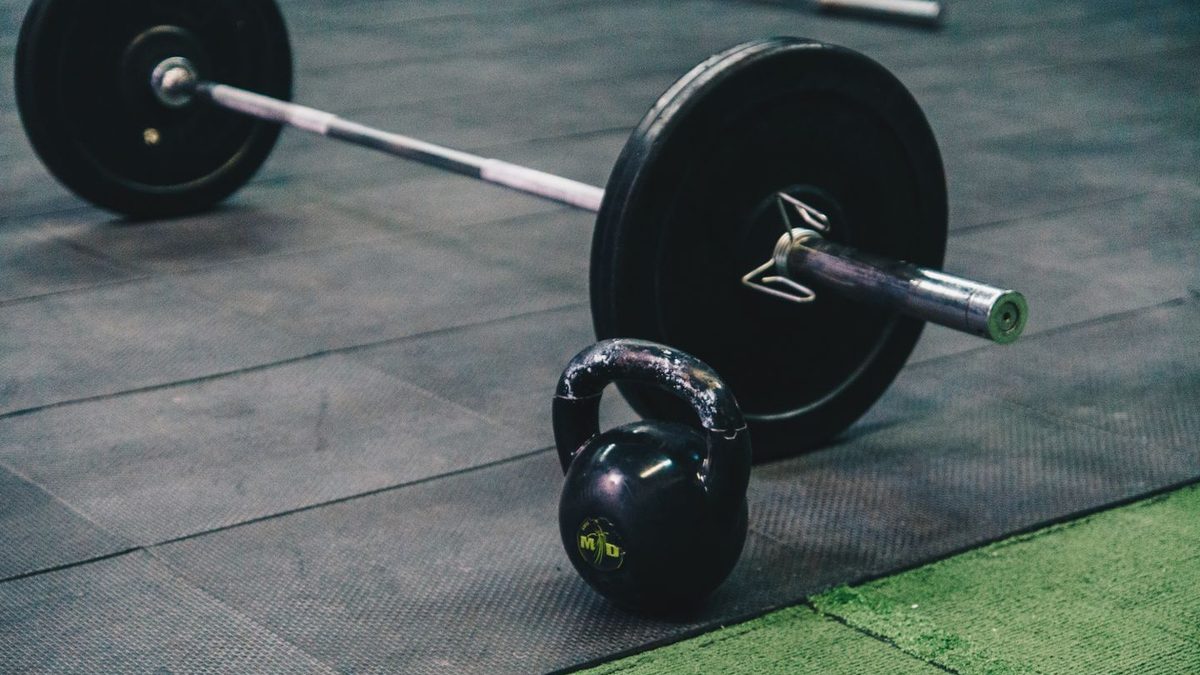
Featured image: Photo by Jonathan Borba on Pexels (free license).
Follow Strong Saga
New home gym guides, compared and ranked. Short video versions of every guide are on our channels.
 Foam Tiles or Stall Mats?