Last updated: October 18, 2026
The best weight lifting belt for most people is a 4-inch, 10 mm leather belt with a lever buckle: 4 inches is the maximum width every powerlifting federation allows, 10 mm is stiff enough to brace against on a heavy squat or deadlift without the break-in pain of 13 mm, and a lever lets you set the same tightness every set in one motion. If you train CrossFit, Olympic lifts or anything with a lot of movement between sets, a 4-inch nylon belt with a self-locking buckle is more comfortable and easier to adjust; if you are on a budget, a cheaper leather or nylon belt gives most of the support for a fraction of the price. This guide compares and ranks eight weight lifting belts on material, thickness, width, buckle, federation approval, sizing and price, using the makers’ own specifications and retailer listings read on October 18, 2026.
Our pick is the Gymreapers 10mm Lever Belt: 4 in wide, 10 mm vegetable-tanned leather with a suede liner, IPF, IPL, USPA and USAPL approved, with a lifetime warranty on the lever and the belt. For CrossFit, the Element 26 Self-Locking belt; for a first belt on a budget, the Dark Iron Fitness leather belt.
Top pick
Gymreapers 10mm Lever Belt
Best overall: 4 in, 10 mm leather, suede liner, IPF/IPL/USPA/USAPL approved.
| Product | Best for | Key spec | |
|---|---|---|---|
| Gymreapers 10mm Lever Belt | Best overall | 4 in, 10 mm leather, suede liner, IPF/IPL/USPA/USAPL approved | Check price at Amazon |
| Iron Bull Strength 10mm Powerlifting Belt | Best prong belt for powerlifting | 4 in, 10 mm suede leather, double prong, IPF approved | Check price at Amazon |
| Element 26 Self-Locking Weight Lifting Belt | Best for CrossFit and Olympic lifting | 4 in, 100% nylon, metal self-locking buckle, lifetime warranty | Check price at Amazon |
| Dark Iron Fitness Genuine Leather Weightlifting Belt | Best budget leather belt | 4 in, buffalo-hide leather, double prong, reinforced stitching | Check price at Amazon |
| Harbinger 4-Inch Nylon Weightlifting Belt | Best budget nylon belt | 4 in, flexible nylon, steel roller buckle with hook-and-loop | Check price at Amazon |
| Schiek Sports 2004 Leather Contour Belt | Most comfortable (contoured) | 4.75 in back tapering at the front, made in the USA | Check price at Amazon |
| 2POOD Straight Weightlifting Belt | Best straight nylon for Olympic lifting | 4 in, WODclamp buckle, USAW and USPA compliant | Check price at Amazon |
| Steel Sweat Single Prong Belt | Best single-prong leather | vegetable-tanned leather | Check price at Amazon |
Our pick
Gymreapers 10mm Lever Belt: best weight lifting belt overall (4 in, 10 mm leather)
The Gymreapers 10mm Lever Belt is the belt we would hand a home-gym lifter who squats and deadlifts seriously and wants one belt for the next ten years. It is a uniform 4 inches tall front to back, 10 mm (0.394 in) thick, cut from vegetable-tanned leather with an Amara suede surface that grips a shirt, and closed by a heavy-duty steel lever that locks to the same tightness every set and opens with a flick between sets. It is approved by the IPF, IPL, USPA and USAPL, so it is competition-legal, and Gymreapers covers both the lever and the leather with a lifetime warranty. Sizes run XS (24-31 in) to 2XL (39-46 in), measured around your core over clothes, not your pant size; the lever’s screw-in base moves along the holes when your waist changes, which takes a screwdriver and a minute. It is sold at gymreapers.com and on Amazon; 13 mm versions exist for heavy powerlifters but most people brace better against 10 mm.
Quick picks
- Best overall: Gymreapers 10mm Lever Belt, 4 in, 10 mm leather, suede liner, IPF/IPL/USPA/USAPL approved, lifetime warranty.
- Best prong belt for powerlifting: Iron Bull Strength 10mm Powerlifting Belt, 4 in, 10 mm suede leather, double prong, IPF approved.
- Best for CrossFit and Olympic lifting: Element 26 Self-Locking Weight Lifting Belt, 4 in, 100% nylon, metal self-locking buckle, lifetime warranty.
- Best budget leather belt: Dark Iron Fitness Genuine Leather Weightlifting Belt, 4 in, buffalo-hide leather, double prong, reinforced stitching.
- Best budget nylon belt: Harbinger 4-Inch Nylon Weightlifting Belt, 4 in, flexible nylon, steel roller buckle with hook-and-loop.
- Most comfortable (contoured): Schiek Sports 2004 Leather Contour Belt, 4.75 in back tapering at the front, made in the USA.
- Best straight nylon for Olympic lifting: 2POOD Straight Weightlifting Belt, 4 in, WODclamp buckle, USAW and USPA compliant.
- Best single-prong leather: Steel Sweat 4 in by 10 mm Single Prong Belt, vegetable-tanned leather.
Eight weight lifting belts compared
| Belt | Material / thickness | Width | Buckle | Competition | Sizes |
|---|---|---|---|---|---|
| Gymreapers 10mm Lever Check price | Vegetable-tanned leather, suede liner, 10 mm | 4 in uniform | Lever | IPF, IPL, USPA, USAPL | XS-2XL (24-46 in core) |
| Iron Bull Strength 10mm | Suede leather, single cut, 10 mm | 4 in uniform | Double prong | IPF approved (maker) | XS-4XL (maker’s range) |
| Element 26 Self-Locking Check price | 100% nylon | 4 in uniform | Metal self-locking buckle, hook-and-loop | Not for raw powerlifting meets; fine for CrossFit, USAW-style widths | XS-XXL |
| Dark Iron Fitness Leather Check price | Buffalo-hide leather, flexible | 4 in uniform | Double prong | Not listed | Maker’s S-XL range |
| Harbinger 4-Inch Nylon Check price | Nylon, flexible | 4 in | Steel roller buckle with hook-and-loop | Not listed | S-XL |
| Schiek 2004 Contour Check price | Padded leather, contoured | 4.75 in back, narrower front | Hook-and-loop plus buckle | Not IPF (shape) | S-XL |
| 2POOD Straight Check price | Nylon | 4 in uniform | WODclamp hook-and-loop | USAW and USPA compliant (maker) | XS-XL |
| Steel Sweat Single Prong Check price | Vegetable-tanned leather, 10 mm | 4 in uniform | Single prong | Meets IPF dimensions (not on the IPF list) | S-XL |
1. Gymreapers 10mm Lever Belt: best overall
See our pick above. One more note: the lever is the right buckle if your waist size is stable, because you set it once; if you bulk and cut through the year, the prong belts below adjust in seconds and the lever takes a screwdriver.
2. Iron Bull Strength 10mm Powerlifting Belt: best prong belt for powerlifting
Iron Bull’s 10 mm belt is cut from a single piece of suede leather, 4 inches tall all the way around, with a double-prong roller buckle and a stated IPF approval on the Amazon listing. A prong buckle has one advantage over a lever: you can tighten one hole for a max squat and loosen one for deadlifts without tools. The trade is that a double prong takes two hands and a few seconds to seat. The suede finish grips a shirt and a lifting singlet and needs a short break-in. BarBend’s reviewers rated the matching lever version their best belt overall for its consistent fit and durability and noted the 10 mm leather can dig into the ribs on a short torso.
3. Element 26 Self-Locking Weight Lifting Belt: best for CrossFit and Olympic lifting
The Element 26 is the belt to buy if your training has you going from a heavy clean to burpees in the same minute. It is 4 inches tall, 100% nylon, closed by a full-metal self-locking buckle over a hook-and-loop strap, so it cannot slip open under load but loosens with one pull between sets. Nylon bends with your torso in the catch of a clean or the bottom of a thruster where 10 mm leather fights you. It comes in XS to XXL and ten colors, carries a lifetime warranty against defects, and BarBend listed it as their best CrossFit belt. It will not give the rigid wall a powerlifter wants for a 500 lb squat, and a nylon belt is not legal in IPF raw meets; it is the right belt for everything else.
4. Dark Iron Fitness Genuine Leather Weightlifting Belt: best budget leather belt
Dark Iron’s belt is the best-selling lifting belt on Amazon for a reason: a 4-inch buffalo-hide leather belt with a double-prong buckle and reinforced stitching at a price usually under half of the branded 10 mm belts. The leather is thinner and more flexible than 10 mm, which makes it comfortable from the first session and good for rows, overhead press and general training, but it compresses more under a maximal squat. Powerlifting Technique’s review praised the flexible leather and heavy stitching and called it the obvious first belt. If you are not sure you will use a belt, start here.
5. Harbinger 4-Inch Nylon Weightlifting Belt: best budget nylon belt
Harbinger’s 4-inch nylon belt is the cheap, flexible belt sold in every sporting-goods store: a nylon body with a steel roller buckle, closed with hook-and-loop so you can set it anywhere rather than at a hole. It is lighter and softer than the Element 26 and gives proportionally less support, which suits lighter lifters, beginners and anyone who wants a reminder to brace rather than a wall to brace against. Sizes S to XL.
6. Schiek Sports 2004 Leather Contour Belt: most comfortable
Schiek’s patented contour belt is shaped like your torso: 4.75 inches deep across the lower back, narrowing toward the front so it does not jam into your ribs or hips at the bottom of a squat, with padding and a hook-and-loop closure backed by a buckle. It is made in the USA. The shape makes it the belt lifters with a short torso or a history of rib bruising reach for, and the one powerlifting federations will not allow (a belt must be a uniform width, no more than 10 cm). Think of it as a training belt for squats, rows and lunges rather than a meet belt; BarBend’s review of the model L2004 found it stable through flexion and extension.
7. 2POOD Straight Weightlifting Belt: best straight nylon belt for Olympic lifting
2POOD’s Straight belt is a 4-inch uniform nylon belt with the brand’s WODclamp, a metal hook that locks the hook-and-loop strap so it cannot peel open mid-rep. The maker lists it as USAW and USPA compliant, so it is legal on a weightlifting platform where a tapered belt is not. It is the Element 26’s closest rival; pick 2POOD for the clamp and the uniform 4 in support in the front, Element 26 for the lower price and the lifetime warranty.
8. Steel Sweat Single Prong Belt: best single-prong leather belt
A single prong is the buckle most powerlifters prefer on a prong belt: one tongue to seat, one hand to pull. Steel Sweat’s is 4 inches by 10 mm in vegetable-tanned leather, the same dimensions as the IPF’s maximum (10 cm by 13 mm), at a price usually between the Dark Iron and the Gymreapers. It is not on the IPF’s approved-brands list, so check your federation’s rules before a meet; for training it is a stiff, plain, well-reviewed leather belt.
How to size a weight lifting belt
Measure around your core at the navel, over the clothes you train in, with a relaxed stomach, and use the maker’s chart for that number, not your jeans size (jeans sit on the hips and run 2 to 4 inches smaller). Gymreapers’ chart, for example, puts a 34 in core in a Large (34-41 in) and a 32 in core in a Medium (30-36 in); when you land in two sizes, take the one where your measurement sits near the middle so the belt still fits after a bulk or a cut. A prong belt should close in a middle hole, with room to go one tighter and two looser. A lever belt is set once with the screws and then only opens and closes, so size it with care.
How tight? Tight enough that you can push your belly hard into it on a big breath and it does not move, but loose enough to slide a flat hand between belt and stomach when you are relaxed. Over-tightening a belt limits the breath you brace with.
How to choose a weight lifting belt
Leather vs nylon. Leather is rigid: it gives the strongest wall to brace against for squats and deadlifts and lasts decades, and it needs a break-in. Nylon flexes with you, costs less and suits Olympic lifts, CrossFit and anything with movement between heavy sets.
10 mm vs 13 mm. 13 mm is the maximum thickness powerlifting federations allow and the most rigid; it is also the hardest to break in and the one most lifters find uncomfortable. 10 mm is the thickness most lifters, including most competitive ones, use.
Lever vs prong. A lever gives the same tightness every set in one motion but needs a screwdriver to change size. A single prong adjusts in seconds; a double prong is marginally more secure and slower to fasten. Velcro with a lock (Element 26, 2POOD) is the fastest and the least rigid.
Width. 4 inches (10 cm) is the maximum under IPF rules and the standard; a 3-inch belt suits short torsos and Olympic lifting; a contoured belt (Schiek) is comfortable but not meet-legal.
Competition approval. If you plan to compete, buy from a federation-approved brand (Gymreapers’ 10 mm lever and Iron Bull’s 10 mm are IPF-listed) and check the current list, which changes.
Where it fits in a home gym. A belt is the first accessory after the bar and the rack: it goes with the Olympic barbell you squat with, inside the power rack you squat in, and it matters most on the heavy singles a squat rack and bench combo is built for. Trap bar deadlifts load the spine less, which is one reason beginners start with our trap bar picks.
Frequently asked questions
Do weight lifting belts really work?
Yes, for heavy squats, deadlifts and overhead presses. A belt gives your abdominal wall something to push against, which raises intra-abdominal pressure and stiffens the trunk; lifters typically move a few percent more weight and feel more stable. It does not strengthen the back on its own, and it does nothing for lifts where the spine is not loaded.
What are the downsides of using a lifting belt?
Relying on a belt for every set can leave your bracing weaker without it, a belt worn too tight restricts the breath you need to brace, and a stiff 13 mm belt can bruise ribs and hips until it breaks in. Use it for your heaviest sets, keep warm-ups beltless, and learn to brace first. People with high blood pressure, hernias or a pregnancy should ask a doctor before using one.
At what point should I start wearing a lifting belt?
Once you can brace properly without one and your working squat or deadlift is around bodyweight or more, and in any case for sets at 85% of your max and above. Beginners do not need a belt for the first months of training; the belt helps most when the weight is heavy enough that trunk stiffness, not leg strength, is the limit.
Is a 10mm or 13mm belt better?
10 mm for most people: it is stiff enough for heavy squats and deadlifts, breaks in faster and sits more comfortably in the bottom of a squat. 13 mm is for heavy powerlifters who want maximum rigidity and accept a longer break-in. Both are legal under IPF rules (maximum 13 mm).
Should I get a lever or prong belt?
Lever if your waist size is stable and you want the same tightness every set in one motion; prong if your weight changes through the year or you tighten for squats and loosen for deadlifts. A single prong is faster than a double prong with no real loss of security.
Is a leather or nylon weightlifting belt better?
Leather for powerlifting-style training where maximum rigidity matters and the belt comes off between lifts; nylon for CrossFit, Olympic lifting and general training where you move between heavy sets. Many lifters own one of each.
How tight should a weightlifting belt be?
Tight enough that pushing your stomach into it on a big breath meets firm resistance, loose enough to slide a flat hand behind it when relaxed. If you cannot take a full breath into your belly, loosen it one hole.
Bottom line: the Gymreapers 10mm Lever Belt for squats and deadlifts, the Element 26 or 2POOD for CrossFit and Olympic lifting, the Dark Iron Fitness or Harbinger for a first belt on a budget, and the Schiek 2004 if a straight belt bruises your ribs. Setting up the rest? Start with our home gym under $1,000 plan.
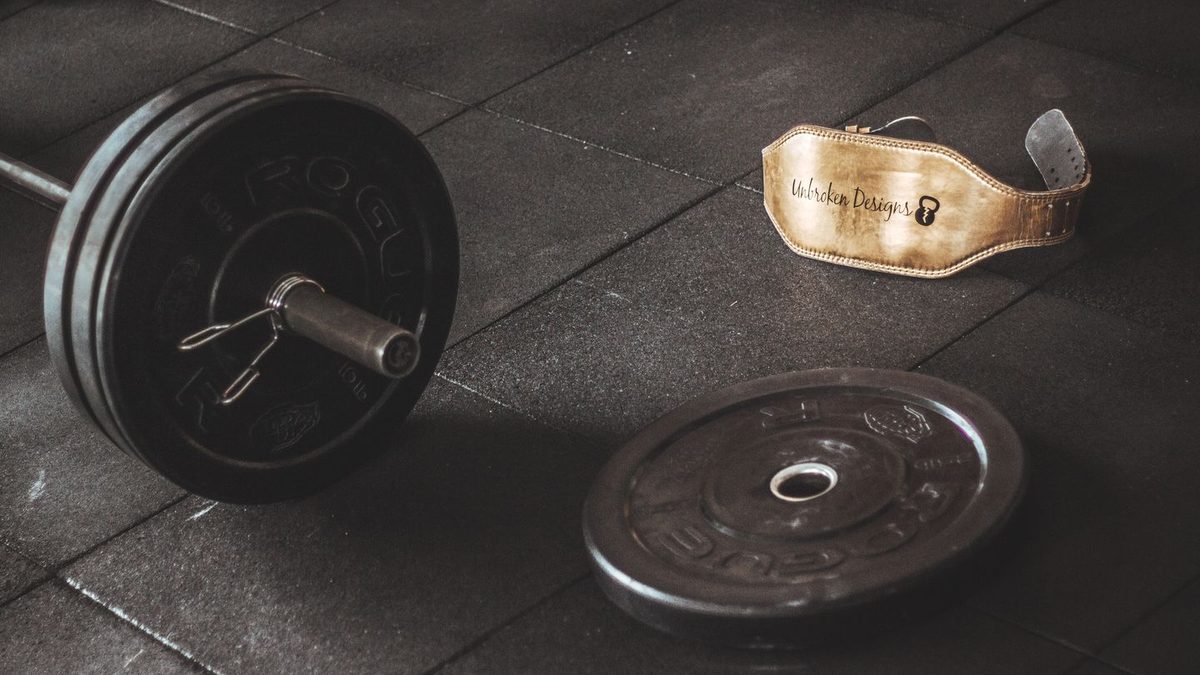
Sources: the Amazon listings linked above, gymreapers.com and the IPF Technical Rules Book (belt width maximum 10 cm, thickness maximum 13 mm), read on October 18, 2026; BarBend’s and Powerlifting Technique’s published reviews for the ratings quoted. Materials, thicknesses, sizes and federation approvals are the makers’ listed specifications, not independently measured; check your federation’s current approved list before a meet. Not medical advice. Featured image: a Strong Saga illustration, not a product in this list.
Follow Strong Saga
New home gym guides, compared and ranked. Short video versions of every guide are on our channels.
 5 Home Gym Buys Ranked