
Black Friday home gym deals: see today’s verified deals
Best belt squat attachment, short answer: the Fringe Sport Mammoth Belt Squat is the best belt squat attachment for most home gyms, because it comes with 5/8 inch and 1 inch hole options, lists a 900 lb capacity and has an adjustable 39 to 48.75 inch lever arm with a belt included. On a tighter budget, the Revolt Belt Squat 2.0 fits 2×2, 2×3 and 3×3 racks and also includes a belt; if you own a REP PR-4000 or PR-5000 with the lat pulldown, the REP Belt Squat gives true 1:1 cable resistance.
A belt squat attachment pulls hard on one side of your rack. Check your upright size and hole size, then bolt the rack down or weigh it down before your first heavy set. Check the Fringe Sport Mammoth Belt Squat at Amazon
Want lever arms for rows and presses too? The Bells of Steel Belt Squat / Lever Arms kit. Need it to fold flat against a wall? The PRx Profile Belt Squat.
Quick answers
What is the best belt squat attachment?
The Fringe Sport Mammoth Belt Squat for most racks, the Revolt Belt Squat 2.0 as the budget pick, and the REP Belt Squat for REP PR-4000 and PR-5000 owners who have the lat pulldown and low row attachment.
Does a belt squat attachment fit any power rack?
Not all of them. Lever-style models from Fringe Sport and Revolt are sold with 5/8 inch and 1 inch hole options for most racks, but REP, Sorinex, PRx and Bells of Steel list specific racks, tube sizes or required attachments.
Our 3 quick picks
Compared and ranked from published specs and current listings. Prices change, so check today’s price before you buy.
Black Friday home gym deals: see our tracker
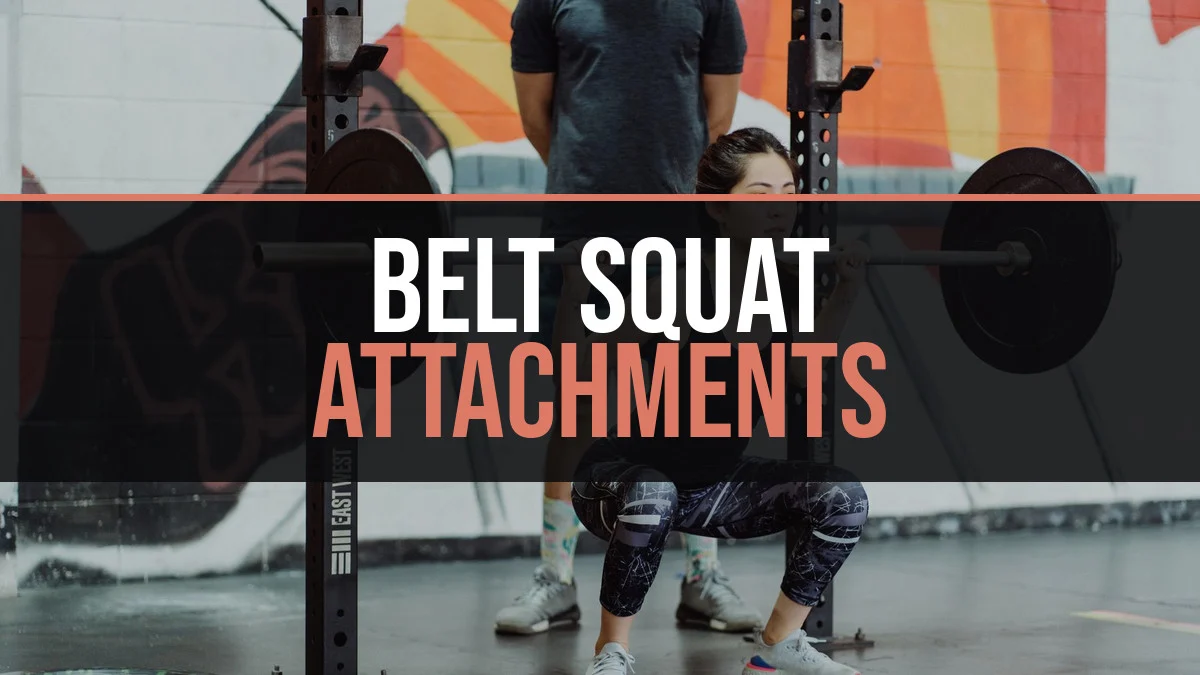
A belt squat attachment turns the power rack you already own into a belt squat station. Instead of a barbell across your back, a belt around your hips connects by chain to a loaded lever arm or a cable, so your legs do the work while your spine and shoulders carry almost nothing. That is why lifters with cranky backs, sore shoulders or elbows that hate a low bar position love them, and why strength coaches use them to add squat volume without adding more back fatigue. A full belt squat machine does the same job, but it costs more and takes its own patch of floor. An attachment borrows the rack’s footprint and stores on a peg or against the wall when you are done.
The catch is that “belt squat attachment” covers three very different designs. Lever-style attachments pivot from a rack upright and load plates on the end of the arm. Cable-style attachments run a cable through pulleys so a plate stack or loading pin gives true 1:1 resistance. And jammer-style attachments hang off a jammer arm you already own. Each one fits different racks, so your rack decides your shortlist before capacity or price does. We compared seven rack belt squat attachments from Fringe Sport, Revolt, Bells of Steel, PRx Performance, REP Fitness, Sorinex and Stray Dog Strength, then ranked them for real home gyms. Still choosing the rack itself? Start with our best power racks under $500 or the power rack vs squat rack comparison.
Belt squat attachments compared: fit, capacity and design
The table shows what each maker lists: the design, the racks or holes it fits, the listed capacity, whether a belt comes in the box and one key build note. “Not stated” means the number was not on the product page we read. A listed capacity is the maker’s figure for the attachment; how well your rack is anchored still sets the real limit.
| Belt squat attachment | Best for | Design | Fits | Listed capacity | Belt included | Build note |
|---|---|---|---|---|---|---|
| Fringe Sport Mammoth Belt Squat Check price on Amazon | Best overall | Lever arm, plate loaded | Most racks; 5/8 in and 1 in hole options | 900 lb | Yes | 39 to 48.75 in adjustable arm, 14 in loading pin, 32 lb |
| Revolt Belt Squat 2.0 Check price on Amazon | Best budget | Lever arm, plate loaded | 2×2, 2×3 and 3×3 racks; 5/8 in to 1 in holes | Up to 495 lb (11 x 45 lb plates) | Yes | 14.4 in post, 30 in long, 18 lb, kickstand option |
| Bells of Steel Belt Squat / Lever Arms Check price on Amazon | Best multi-use | Lever arms, plate loaded | Bells of Steel 2.3 x 2.3 in (5/8 in holes) or Hydra 3 x 3 in | 440 lb | Yes | Kit with 2 lever arms, handles, plate pegs; limited lifetime warranty |
| PRx Profile Belt Squat Check price on Amazon | Best fold-away | Lever arm, plate loaded | Wall mount, or true 3 x 3 in racks with 5/8 in holes | Not stated | Yes (Spud Inc.) | Folds to 53 x 8 x 8 in, 16-5/8 in horn, magnetic kickstand |
| REP Belt Squat See maker | Best for REP racks | Cable, 1:1 ratio | REP PR-4000 and PR-5000 with Lat Pulldown and Low Row or Ares attachment | 600 lb maximum | No | 11-gauge steel, 41 lb, quick-release pins |
| Sorinex JxSquat See maker | Best made in USA | Jammer arm, plate loaded | Racks with a Sorinex fixed or adjustable Jammer Arm | Not stated | Yes (Spud Inc.) | 11-gauge American steel, 16 in sleeve, automatic kickstand |
| Stray Dog Strength Platform Belt Squat See maker | Best commercial | Cable, 1:1 ratio, platform | Inside racks; best off the back of Alpha Double Half Racks | Not stated | Not stated | 30 lb weight carriage, aluminum pulleys, made in USA |
1. Fringe Sport Mammoth Belt Squat: best overall
Key specs: Lever arm adjustable from 39 to 48.75 inches, 14 inch loading pin, 900 lb listed capacity, 32 lb, fits 5/8 inch and 1 inch holes, UHMW plastic where it meets the rack, padded adjustable belt included, wall-mount accessory and kickstand sold as add-ons, lifetime warranty on the lever arm and 1 year on the belt.
The Mammoth ranks first because it clears the two hurdles that stop most rack belt squats: fit and capacity. Fringe Sport sells it with both 5/8 inch and 1 inch hole options and says it works with every rack size on the market, so it is the safest bet when your rack is a less common brand. Its 900 lb listed capacity is the highest of the lever-style attachments here, well beyond what most home lifters will hang on a belt.
The arm is also one of the longest you can buy, adjustable from 39 to 48.75 inches. A longer arm swings through a flatter arc, so the plates travel more up and down and less toward you, and you can tune the length to your height. The 14 inch loading pin takes a stack of plates, and a padded, adjustable belt comes in the box, which saves a separate purchase. Fringe offers bundles with a kickstand and magnetic pin, and a version with dual weight horns, so you can buy only the parts you need. Fringe also lists rows, deadlifts and lunges as options with a handle attachment that is sold separately.
The base price covers the arm and belt only. If you want to step in and out without lifting the loaded arm by hand, budget for the kickstand, because getting under a loaded lever without one is the clumsiest part of any lever belt squat.
Best for: most racks, including off-brand ones, and lifters who want the most capacity and a long, adjustable arm. Skip if: your rack is a REP PR-4000 or PR-5000 with the lat pulldown already installed; the cable REP model may suit you better.
Spec source: Fringe Sport Mammoth Belt Squat product page, read November 2026.
2. Revolt Belt Squat 2.0: best budget
Key specs: Lever arm, fits 2×2, 2×3 and 3×3 inch racks with a dedicated hole for 5/8 inch and 1 inch pins, 14.4 inch post for up to eleven 45 lb plates (up to 495 lb), 30 inches long by 14 inches high, 18 lb, black powder coat, adjustable length, belt included, optional kickstand with adjustable 10 degree foot plates.
Revolt gets the budget spot because it costs the least of the lever attachments we compared at the time of writing, yet still includes a belt and covers the three common upright sizes. Two dedicated holes take 5/8 inch or 1 inch rack pins, so a 2×2 budget rack and a 3×3 rack with 1 inch hardware can both use it.
Revolt rates the 14.4 inch post for eleven standard 45 lb plates, which it lists as up to 495 lb. That is plenty for high-rep belt squats and lunges, though it is lower than the Mammoth if you plan to go very heavy. The 2.0 version adds an adjustable length, and the optional kickstand drops to the floor on its own when the arm is lifted, then resets with a step on the foot plate. Its foot plates tilt to a 10 degree incline and slide side to side for stance width, a nice touch for quad-focused sets.
At 18 lb it is the lightest attachment here, so it is easy to move between uprights or hang on a storage peg. Revolt also lists rows, curls and viking presses as extra uses.
Best for: budget racks with 2×2 uprights, first belt squat setups, and anyone who wants the belt and kickstand in one order. Skip if: you want to load much more than 495 lb.
Spec source: Revolt Belt Squat 2.0 product page, read November 2026.
3. Bells of Steel Belt Squat / Lever Arms Rack Attachment: best multi-use
Key specs: Kit of 2 lever arms, 2 closed lever arm handles, 2 plate pegs and a belt squat belt, versions for Bells of Steel 2.3 x 2.3 inch racks with 5/8 inch holes or Hydra 3 x 3 inch racks, 440 lb capacity, 40.3 inch length, 1.9 inch sleeve diameter, 9 inch loadable length, powder coat, limited lifetime warranty.
This is the pick if you want more than belt squats from one purchase. Bells of Steel bundles a pair of lever arms, two closed handles, two plate pegs and a belt, and every piece works on its own. Run one arm as a belt squat, or both as lever arms for rows, high pulls, presses and Romanian deadlifts, which Bells of Steel lists as uses.
The trade-offs are fit and load. It is sold for Bells of Steel racks, in a 2.3 x 2.3 inch version with 5/8 inch holes and a Hydra 3 x 3 inch version, so check your uprights before ordering. The listed 440 lb capacity and 9 inch loadable sleeve are the smallest here, which suits moderate belt squat loads and accessory work more than maximal sets. The limited lifetime warranty is a plus.
Bells of Steel positions it as the compact, cheaper alternative to its own full Belt Squat Machine, so if you already train on a Bells of Steel rack, it is the most natural add-on.
Best for: Bells of Steel rack owners who also want lever arm rows, presses and RDLs. Skip if: your rack is another brand, or you plan to belt squat more than 440 lb.
Spec source: Bells of Steel Belt Squat / Lever Arms Rack Attachment product page, read November 2026.
4. PRx Profile Belt Squat: best fold-away
Key specs: Lever arm that mounts to a wall or to a rack, stored size 53 x 8 x 8 inches, 54 inch length, 16-5/8 inch usable weight horn, rack mount hardware for 5/8 inch holes, lateral hinges, magnetic kickstand, Spud Inc. belt, knurled handle and PRx mag pin included, wall-mounting hardware included, made in Fargo, ND with foreign and domestic material, limited lifetime warranty.
The PRx Profile is built for small garages where every inch of floor matters. It mounts to a wall or to a rack and folds back flat when you are done, taking up an 8 by 8 inch strip when stored. PRx built it with Vendetta Strength and Athletics and includes a Spud Inc. belt, a magnetic kickstand, a knurled handle and the wall hardware.
Its 16-5/8 inch weight horn is the longest usable loading length among the lever models here, and lateral hinges let the arm move side to side, which PRx says makes side lunges easier. PRx does not state a weight capacity on the product page, so we cannot rank it on load.
Read the fit notes closely. PRx says it can mount to many racks with 5/8 inch or 1 inch holes, but the included rack hardware is 5/8 inch, it asks for true 3 x 3 inch construction and spacing, it cannot guarantee competitor racks, and it does not mount to its own Profile PRO or ONE folding racks.
Best for: tight garages, wall-mounted setups and lifters who want the belt squat out of the way between sessions. Skip if: you need a stated capacity, or your rack is a 2×2 or a PRx folding rack.
Spec source: PRx Profile Belt Squat product page, read November 2026.
5. REP Belt Squat: best for REP PR-4000 and PR-5000 racks
Key specs: Cable-driven with a 1:1 ratio, attaches to the REP Lat Pulldown and Low Row attachment or Ares attachment inside a PR-4000 or PR-5000 (V2) power rack, 600 lb maximum capacity, 41 lb, 8.1 inches high by 25.3 inches long by 41.3 inches wide, 11-gauge steel, plastic-coated galvanized cable, quick-release pins, belt not included.
The REP is the only pick here that uses a cable through pulleys instead of a lever, so the resistance stays the same through the whole rep. REP lists a 1:1 ratio, meaning 10 lb on the stack or pin gives 10 lb at the belt. It lists a 600 lb maximum capacity and an 11-gauge steel frame.
The catch is that it is part of a system. It attaches to REP’s Lat Pulldown and Low Row attachment or the Ares attachment inside a PR-4000 or PR-5000 rack, REP says it does not work with the Apollo, and it cannot guarantee non-REP racks. A belt is not included, so add one to the order. REP also suggests a small plyo box under each foot for extra depth.
If you already own a PR-4000 or PR-5000 with the pulldown, this is the most space-efficient belt squat you can add, because it uses hardware that is already in your rack.
Best for: REP PR-4000 and PR-5000 owners with the lat pulldown and low row or Ares attachment. Skip if: you do not own one of those racks and that attachment.
Spec source: REP Belt Squat product page, read November 2026.
Need a belt for it? See belt squat belts on Amazon.
6. Sorinex JxSquat: best made in USA
Key specs: Hangs from a Sorinex fixed or adjustable Jammer Arm (sold separately), 25 inch JxSquat length, 50 inch length with the jammer, 40 inches wide, 27 inches high, 16 inch sleeve, felt weight 60 percent of the load, Spud Inc. belt with chain and speed hook included, automatic kickstand, no platform needed, 11-gauge American steel, made in USA, built to order with a lead time of up to 10 to 12 weeks.
Sorinex calls the JxSquat the first rack-attached jammer arm belt squat. It turns a jammer arm you already own into a belt squat, with an automatic kickstand and no platform needed, and it includes a Spud Inc. belt with chain and speed hook. It is made in the USA from 11-gauge steel.
Two specs matter. First, Sorinex lists the felt weight as 60 percent, so 300 lb of plates feels like about 180 lb at the belt. That is not a flaw, but plan your plate count around it. Second, it needs a Sorinex jammer arm attachment, which is not included. Sorinex does not state a weight capacity on the product page.
If your rack already wears Sorinex jammer arms, this is a neat way to add belt squats without another big frame. Our best jammer arms guide covers the arms themselves.
Best for: Sorinex rack owners with jammer arms who want US-made steel. Skip if: you have no Sorinex jammer arm, or you cannot wait for a built-to-order lead time.
Spec source: Sorinex JxSquat product page, read November 2026.
7. Stray Dog Strength Platform Belt Squat Rack Attachment: best commercial
Key specs: Cable-driven, plate-loaded, true 1:1 ratio, 30 lb weight carriage, 20 inch or 30 inch crossmember length, diamond plate platform, aluminum pulleys, split squat posts, made in USA, designed to sit inside racks and best suited to the back of Stray Dog Alpha Double Half Racks.
This is a commercial gym piece, and it is priced like one. Stray Dog builds a full cable platform that sits inside a rack, with a 1:1 ratio and a 30 lb carriage, so the load you see is the load you feel. Rear uprights work with Stray Dog Alpha Rollers for cable split squats.
Stray Dog says it is best used off the back of its Alpha Double Half Racks, because the platform limits the rack for normal barbell work. It does not state a weight capacity or whether a belt is included on the product page. For most home gyms, one of the lever models above makes more sense; this is for a serious home gym or small facility that already runs Stray Dog racks.
Best for: Stray Dog rack owners and facilities that want a dedicated, cable-driven belt squat station. Skip if: you have a typical home rack or budget.
Spec source: Stray Dog Strength Platform Belt Squat Rack Attachment product page, read November 2026.
Which belt squat attachment should you buy?
- Your rack is an off-brand, budget or older model: the Fringe Sport Mammoth. It has the widest fit claim and the highest lever capacity here (900 lb).
- You want the lowest cost that still includes a belt: the Revolt Belt Squat 2.0. Add the kickstand bundle if you can.
- You own a Bells of Steel 2.3 inch or Hydra rack: the Bells of Steel Belt Squat / Lever Arms kit, which doubles as lever arms for rows and presses.
- Your garage is tight and you want it off the floor: the PRx Profile Belt Squat, wall mounted or on a true 3×3 rack.
- You own a REP PR-4000 or PR-5000 with the lat pulldown: the REP Belt Squat for true 1:1 cable resistance. Buy a belt with it.
- You already run Sorinex jammer arms: the Sorinex JxSquat, and plan for its 60 percent felt weight.
- You are outfitting a serious gym on Stray Dog racks: the Stray Dog Platform Belt Squat.
- You do not own a rack yet: pick the rack first. Our power racks under $500 and half racks guides note tube and hole sizes so you can plan add-ons.
Lever vs cable vs jammer: how the three designs differ
Lever-style attachments (Fringe Sport, Revolt, Bells of Steel, PRx) pivot from a rack upright or wall bracket. You load plates on a post at the end of the arm, clip the belt chain to the arm and squat. They are the cheapest, the easiest to fit and the easiest to store. The arm moves in an arc, so the load shifts slightly through the rep, and a longer arm makes that arc flatter. Most need a kickstand, built in or sold separately, to hold the loaded arm while you step in.
Cable-style attachments (REP, Stray Dog) run a cable through pulleys to a loading pin or carriage. Both makers list a 1:1 ratio, so the number on the plates is the number at your hips, and the pull stays straight down. They are tied to specific racks and cost more, and the REP needs the brand’s pulldown attachment to work.
Jammer-style attachments (Sorinex JxSquat) hang from a jammer arm you already own. Sorinex lists the felt weight at 60 percent of the plate load. They make the most sense when the jammer arms are already on your rack.
Belt squat attachment vs belt squat machine
A standalone belt squat machine has its own frame, platform and loading system, so it is more stable and usually smoother, and nothing about your rack limits it. Titan’s SquatMax-MD, for example, lists a 1,000 lb capacity, 11-gauge steel and a true 1:1 loading ratio, but it takes its own floor space and costs several times more than a lever attachment. For most home gyms, an attachment is the better buy: it uses the rack you already paid for, adds little or no floor space and can be stored away. Pick a full machine only if belt squats are a main lift in your program and you have the room. If what you really want is heavy leg work with no bar on your back, a rack and bench setup plus a belt squat attachment covers far more exercises per square foot than a single machine.
Spec source: Titan SquatMax-MD product page, read November 2026.
Buying checklist: measure these before you order
- Upright size: measure the outside of one upright: 2×2, 2×3, 2.3×2.3 (60 mm) or 3×3 inches. Revolt lists 2×2, 2×3 and 3×3; PRx asks for true 3×3; Bells of Steel sells 2.3 inch and Hydra 3×3 versions.
- Hole or pin size: 5/8 inch or 1 inch. Fringe Sport and Revolt sell both options; order the one that matches your rack.
- Weight capacity: listed capacities in this comparison run from 440 lb (Bells of Steel) to 900 lb (Fringe Sport Mammoth), with Revolt at up to 495 lb and REP at 600 lb. PRx, Sorinex and Stray Dog do not state one. Compare against the heaviest load you plan to belt squat, plus a margin.
- Floor space in front of the rack: a lever arm sticks out about 2.5 to 4 feet from the upright (Fringe Sport lists 39 to 48.75 inches, Bells of Steel 40.3 inches, Revolt 30 inches), and you need room to stand and squat beside it. Measure from the upright to the nearest wall or car.
- Loading length: the post decides how many plates fit. Revolt lists 14.4 inches, Fringe Sport 14 inches, PRx 16-5/8 inches, Sorinex 16 inches and Bells of Steel 9 inches. Bumper plates are thicker than iron, so fewer fit.
- Belt included or not: Fringe Sport, Revolt, Bells of Steel, PRx and Sorinex include one; REP does not.
- Kickstand: PRx and Sorinex include one; Fringe Sport and Revolt sell it in bundles. Without one you lift the loaded arm by hand to get under it.
- Anchoring: a loaded lever pulls up and sideways on one upright. Bolt the rack to the floor, or at least load the opposite side with plate storage, before heavy sets.
- Ceiling height: you will often stand on low boxes or plates for depth, so check that you and the arm still clear the ceiling at the top of each rep.
How to set up and use a belt squat attachment safely
- Anchor the rack. Bolt it down if you can. If you cannot, add weight to the opposite side or the rear of the rack so the pull of the lever cannot tip or walk it.
- Mount at the maker’s height and side. Follow the manual for which upright and which hole. Use the pins and hardware the maker supplies for your hole size.
- Set the kickstand before loading. Load plates with the arm resting on the kickstand or the floor, never while you are wearing the belt.
- Fit the belt low on the hips. The belt sits across the hips, not the waist, and the chain should hang straight down between your feet.
- Start light. Belt squats feel different from barbell squats, and lever models change resistance through the arc. Use a few light sets to find your stance and depth.
- Stand on boxes for depth if needed. Low, stable boxes or plates under each foot let the load travel lower. REP suggests a small plyo box on each side for its model.
- Rerack with control. Return the arm to the kickstand before unclipping the belt, then unload plates evenly.
More rack guides on Strong Saga
- Best power racks under $500
- Best jammer arms for a home gym
- Best monolift attachment
- Best dip attachment for a squat rack
- Best landmine attachment
- Best half racks
- Best weight lifting belts (a lifting belt is a different product: it braces your core, it does not hold weight)
How we ranked these belt squat attachments
We compared and ranked belt squat attachments using the makers’ published specifications and current product pages, read in November 2026. We weighted how many home racks each one can fit, listed capacity, what comes in the box (belt, kickstand), loading length, build and warranty, and how much floor space it needs, because those decide whether a belt squat works safely on a real home rack. We did not use these products ourselves. Where a product page does not give a number, the table says so instead of guessing. Titan Fitness listed standalone belt squat machines but no rack belt squat attachment when we checked, so it appears only in the machine comparison.
Find gear that fits your space and budget with our free gear finder.
Shopping the holiday sales? Our Titan Fitness Black Friday deals page lists Titan’s current prices on racks, stands and the SquatMax-MD, checked on Titan’s own site.
Frequently asked questions
Which belt squat attachments come with a handle?
The PRx Profile Belt Squat includes a knurled handle, and the Bells of Steel Belt Squat / Lever Arms kit includes 2 closed lever arm handles. Fringe Sport lists a handle attachment for rows, deadlifts and lunges on the Mammoth, sold separately.
What is the point of a belt squat?
A belt around your hips connects to a loaded lever arm or cable, so your legs do the work while your spine and shoulders carry almost nothing. That is why lifters with sore backs, shoulders or elbows use it, and why coaches use it to add squat volume without more back fatigue.
What is the best belt squat attachment?
The Fringe Sport Mammoth Belt Squat for most racks, with 5/8 and 1 inch hole options, a 900 lb listed capacity and a belt included. The Revolt Belt Squat 2.0 is the budget pick, and REP PR-4000 or PR-5000 owners with the lat pulldown should look at the cable-driven REP Belt Squat.
Are belt squat attachments worth it?
Yes, if you want to train legs hard with little load on your spine and shoulders and you already own a rack. An attachment costs far less than a belt squat machine and uses no extra floor when stored. If you have no rack, or belt squats would be a main lift every week, a standalone machine can make more sense.
Will a belt squat attachment fit my power rack?
It depends on the model. Fringe Sport and Revolt sell 5/8 inch and 1 inch hole versions for most racks, and Revolt lists 2×2, 2×3 and 3×3 uprights. Bells of Steel, PRx, REP and Sorinex list specific racks, tube sizes or attachments, so check your upright size and hole size first.
How much weight can a belt squat attachment hold?
Listed capacities in this comparison run from 440 lb (Bells of Steel) to 900 lb (Fringe Sport Mammoth). Revolt lists up to 495 lb of plates and REP lists 600 lb. PRx, Sorinex and Stray Dog do not state a capacity on their product pages.
Do I need to bolt my rack down for a belt squat attachment?
It is strongly recommended. A loaded lever pulls up and sideways on one upright, which can tip or walk a light rack. Bolt it to the floor, or at least load the opposite side with plates, before heavy sets.
Does a belt squat attachment come with a belt?
Most do. Fringe Sport, Revolt, Bells of Steel, PRx and Sorinex include a belt. The REP Belt Squat does not, so you need to buy one separately.
Is a belt squat as good as a barbell squat?
They do different jobs. A belt squat loads the legs and hips while taking load off the spine and shoulders, so it is great for extra leg volume or training around back or shoulder issues. A barbell squat also trains your upper back and core to hold the bar. Many lifters use both.
Belt squat attachment or belt squat machine: which is better?
For most home gyms, the attachment, because it uses the rack you already own and takes little floor space. A machine such as Titan’s SquatMax-MD (1,000 lb listed, true 1:1) is more stable and smoother but needs its own footprint and costs much more.
What is the difference between a belt squat belt and a weight lifting belt?
A belt squat belt hangs weight from your hips by a chain. A weight lifting belt is worn around the waist to help you brace during squats and deadlifts and holds no weight. They are not interchangeable.
What muscles does a belt squat work?
Mainly the quads and glutes, with the adductors and hamstrings helping, much like a barbell squat. The difference is where the load sits: the belt hangs the weight from your hips, so your back and shoulders carry far less of it. That is why many lifters add belt squats for extra leg work without more load on the spine.
Can you do belt squats without a machine?
Yes. A rack attachment like the ones ranked above is the most common way, and for lighter loads a dip belt with a chain while you stand on two sturdy boxes also works. An attachment gives a steadier path and lets you load far more weight than the box method.
Bottom line
The best belt squat attachment is the one that fits your exact rack. For most home gyms that is the Fringe Sport Mammoth Belt Squat, with its wide fit, 900 lb listing and long adjustable arm. The Revolt Belt Squat 2.0 is the budget pick, the Bells of Steel kit is best if you want lever arms too, the PRx Profile folds away in tight garages, and REP PR-4000 and PR-5000 owners with the lat pulldown should take the REP cable model. Measure your uprights and hole size, check the listed capacity, and anchor the rack before your first heavy set.
Not medical advice. Talk to a qualified professional before starting a new training program.
Follow Strong Saga
New home gym guides, compared and ranked. Short video versions of every guide are on our channels.

 5 Home Gym Buys Ranked