
Last updated: October 20, 2026
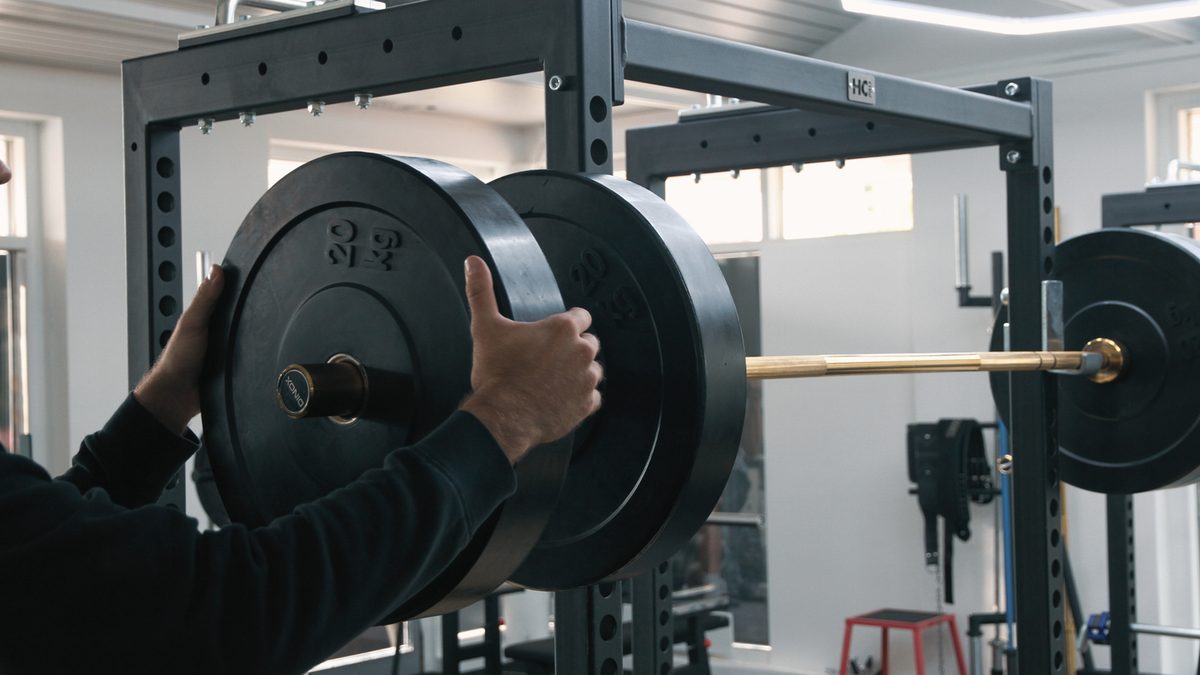
Power rack vs squat rack is the first big call in a barbell home gym. A power rack is a four-post cage you lift inside, with safeties on both sides of you. A squat rack is usually a two-post squat stand or a half rack, which is cheaper, smaller and lighter, but catches a missed rep in front of you instead of around you.
This guide compares the two on safety, space, ceiling height, attachments and price range, then tells you who should buy which. We have not tested these racks hands-on; we compared maker spec pages, our own rack guides and owner discussions.
Quick verdict
Train alone with a barbell? Buy a power rack.
A full cage gives the best catch on a failed squat or bench, and it takes the most attachments. Pick a squat stand or half rack only if your room, ceiling or budget rules a cage out, and set its spotter arms every session.
Watch: 4 home gym power racks compared, with a pick for any ceiling (8 min).
What is the difference between a power rack and a squat rack?
The difference between a power rack and a squat rack is how many posts surround the bar. A power rack (also called a power cage) has four uprights joined at the top and bottom, and you lift inside it. A squat rack is a looser term: most of the time it means a squat stand, two separate or joined uprights with J-hooks, or a half rack, two uprights with spotter arms that reach toward you.
- Power rack / cage: four posts, safeties on both sides of you, usually a built-in pull-up bar.
- Half rack: two front posts plus a short rear frame or storage pegs; spotter arms stick out in front.
- Squat stand: two uprights, often on a flat base or bolted to a wall; the smallest and cheapest way to hold a bar.
- Folding rack: a wall-mounted rack that folds flat; see our folding squat rack guide if floor space is the problem.
Power rack vs squat rack: side-by-side comparison
| Power rack (full cage) | Squat rack (stand or half rack) | |
|---|---|---|
| Posts | 4, joined top and bottom | 2 (stand) or 2 plus a short rear frame (half rack) |
| Where the safeties sit | On both sides of you, inside the cage | In front of you, on spotter arms |
| Typical floor footprint | About 4 x 4 ft to 4 x 5 ft for the frame, plus bar and plate room | About 4 x 2 ft to 4 x 4 ft |
| Typical height | About 80 to 92 in | Adjustable stands from about 70 in; half racks often 80 to 90 in |
| Attachments | Most: pull-up bar, dip bars, landmine, band pegs, cables on some | Fewer; stands often take none |
| Bolting down | Often recommended or required by the maker | Stands rely on a wide base or wall mount |
| Typical price range (new) | About $300 to $900+ for home cages | About $100 to $400 for stands; half racks about $250 to $600 |
Footprints, heights and price ranges are typical figures from maker spec pages and the racks in our guides, rounded. Price ranges are typical street prices for new home-gym gear in the US market in 2026, rounded; they are not quotes, and current prices are on each retailer’s page.
Which is safer when you train alone?
A power rack is safer for solo lifting because a missed squat or bench lands on safeties that sit on both sides of you, so you can step out of the cage. On a squat stand you rely on spotter arms in front of you, which work well when they are long enough and set at the right height, but leave less margin if you lose the bar forward or backward.
- Set safeties every session: just below the lowest point of your rep, tested with an empty bar.
- Check arm length on stands: short spotter arms may not reach the bar path on a bench press.
- Look at hole spacing: 1-inch spacing through the bench zone (often sold as “Westside” spacing) lets you set safeties and J-hooks more precisely.
Space and ceiling height
A squat stand fits more rooms. A full cage needs a clear floor area for the frame plus the length of an Olympic bar (about 7.2 ft) and room to load plates on both ends. Height is the other trap: a cage that stands 90 inches will not fit under a 7-foot basement ceiling once you add flooring.
Measure the lowest point of your ceiling (a beam, duct or garage-door track), subtract your flooring, then compare it with the rack’s listed height. Our power rack ceiling height calculator checks this for you, and our compact garage gym rack guide covers short rooms.
Cost: what you really spend
The rack is rarely the whole bill. Either choice still needs a barbell, plates, an adjustable weight bench and flooring, so the price gap between a stand and a cage is smaller as a share of the full build than it looks on its own.
| Item | Squat stand build | Power rack build |
|---|---|---|
| Rack | About $100 to $400 | About $300 to $900+ |
| Barbell | About $150 to $350 | About $150 to $350 |
| Plates (about 230 to 300 lb) | About $250 to $600 | About $250 to $600 |
| Bench | About $100 to $350 | About $100 to $350 |
| Flooring | About $60 to $200 | About $80 to $250 |
Rounded typical ranges for new gear. Price ranges are typical street prices for new home-gym gear in the US market in 2026, rounded; they are not quotes, and current prices are on each retailer’s page. Our home gym budget calculator builds a list from your own budget.
Who should pick which?
Pick a power rack if you:
- train alone and want to push heavy squats and bench presses safely;
- want pull-ups, dips or a landmine on the same frame;
- have at least a 7.5 to 8 ft ceiling and room for a cage plus a bar.
Pick a squat stand or half rack if you:
- have a low ceiling, a shared garage or a spare room;
- want the lowest total build cost to start barbell training;
- will move the rack often, or want to fold it against a wall.
Want a guided bar instead? Read Smith machine vs power rack.
Our rack guides
- Best power racks under $500: full cages compared and ranked by spec.
- Best folding squat racks: wall-mounted racks for small garages.
- Best squat stands for a home gym: seven two-post stands ranked by height, footprint and capacity.
- Best squat rack and bench combos: rack and bench bought together.
- How to choose a squat rack for a compact garage gym.
How we researched this comparison
Strong Saga compared maker spec pages (for example Titan Fitness’s rack guide), the racks in our own ranked guides and owner discussions on the Starting Strength forum and r/homegym, read in October 2026. We did not test racks hands-on, and we do not rate feel or wobble.
Related guide: best barbell for a home gym.
Related guide: best pull up bar for home.
Power rack vs squat rack: FAQ
What is the difference between a power rack and a squat rack?
A power rack is a four-post cage you step inside, with safety arms or pins on both sides of you. A squat rack usually means two uprights (a squat stand) or a half rack, which holds the bar in front of you and has spotter arms that stick out toward you.
Is a squat rack safe without a spotter?
A squat stand or half rack can be used alone if it has spotter arms set just below the bottom of your rep and you can dump the bar safely. A full power rack is the more forgiving choice for training alone, because the safeties sit on both sides of you inside the cage.
Is a power rack worth it for a home gym?
For most people who train alone with a barbell, yes. It costs more and takes more floor space than a squat stand, but it gives the best safety coverage and usually the most attachments, such as a pull-up bar, dip station and band pegs.
Can you bench press in a squat rack?
Yes, if the J-hooks go low enough for bench height and the spotter arms reach the bar path over your chest. Check the lowest hole and the arm length before you buy, and test the safety height with an empty bar.
How tall should a power rack be for a home gym?
Measure your ceiling first. Most full power racks stand roughly 80 to 92 inches tall, and you need extra room above the top crossmember for pull-ups and overhead presses. Our ceiling height calculator does the math for your room.
Related guide: REP PR-1100 vs Titan T-2.
Not medical advice. Check with a qualified professional before starting a new training plan, especially with an injury or health condition.
Our verdict
For most home gyms where you lift alone, a power rack is worth the extra space and cost. If your ceiling or floor says no, a squat stand or folding rack with long spotter arms is the smart second choice.
Follow Strong Saga
New home gym guides, compared and ranked. Short video versions of every guide are on our channels.
 5 Home Gym Buys Ranked